Buy fastpic.eu ?
We are moving the project
fastpic.eu .
Are you interested in purchasing the domain
fastpic.eu ?
domain@kv-gmbh.de · 0541-91531010
Buy fastpic.eu ?
How does timekeeping work in Star Wars?
In the Star Wars universe, timekeeping is based on the Galactic Standard Calendar, which is divided into 12 months with each month consisting of 30 days. The calendar is based on the orbit of the planet Coruscant, the capital of the Galactic Republic. Each day is divided into 24 standard hours, with each hour consisting of 60 minutes and each minute consisting of 60 seconds. Timekeeping in Star Wars is essential for coordinating events across different planets and systems in the galaxy. **
How did timekeeping work in ancient times?
In ancient times, timekeeping was primarily based on the observation of celestial bodies such as the sun, moon, and stars. The movement of these celestial bodies helped people track the passage of time, with the sun's position in the sky indicating the time of day. Water clocks and sundials were also used to measure time more precisely. The concept of dividing the day into hours, minutes, and seconds was developed by the ancient Egyptians and Greeks, laying the foundation for modern timekeeping systems. **


Similar search terms for Timekeeping
Top-Angebote
Products related to Timekeeping:
-
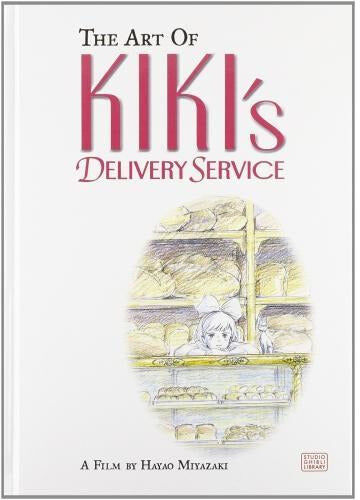
Viz Media The Art Of Kikis Delivery Service - Studio Ghibli LibraryThe Art of Kiki's Delivery Service Description: Now that she's 13 years old; it's time for young Kiki to start thinking about her future. So one night; under the light of a full moon; she grabs her black cat; Jiji; hops on her mother's broom and heads off into the night. The next day she alights upon a friendly Oceanside city; and this; she tells her loyal and furry companion; is where she'll spend the next year learning how to become a real; honest-to-goodness witch. Related Tags: Viz Media, Viz Media LLC17,99 £*Shipping: 2,99 £Secure redirect to the provider
-
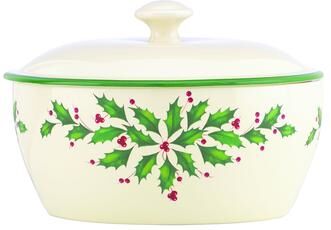
Lenox Hosting The Holidays Covered CasseroleThis Hosting the Holidays Casserole Dish is ideal for serving large dinner parties. Crafted of durable ivory porcelain, this spacious dish features a festive holly motif and comes with a matching lid.45,99 $*Shipping: 0,00 $Secure redirect to the provider
-
Lenox Hosting The Holidays Bread TrayWhether presenting an assortment of rolls or a buttery log of Texas toast, this festive ceramic Hosting the Holidays Bread Tray will not disappoint. The tray features a holly motif and is accented with 24-karat gold.44,49 $*Shipping: 0,00 $Secure redirect to the provider


-
How can one program timekeeping in C?
To program timekeeping in C, one can use the time.h header file which provides functions to work with date and time. The time() function can be used to get the current time in seconds since the Epoch. This value can be converted to a more readable format using functions like localtime() or gmtime(). Additionally, functions like strftime() can be used to format the time in a specific way. By utilizing these functions, one can effectively program timekeeping in C. **
-
How does the timekeeping work in Star Wars?
In the Star Wars universe, timekeeping is based on the Galactic Standard Calendar, which is divided into 12 months with each month consisting of 30 days. The calendar is based on the Coruscant solar cycle, with each day lasting 24 standard hours. Time is also measured in terms of rotations of the planet Coruscant, with 24 hours in a day and 60 minutes in an hour. The timekeeping system in Star Wars is consistent across the galaxy and is used by various species and cultures. **
-
What were the timekeeping methods in the Middle Ages?
In the Middle Ages, timekeeping methods were primarily based on the position of the sun in the sky. Sundials were commonly used to track time during the day, with the shadow cast by the sun indicating the time. Water clocks, known as clepsydrae, were also used to measure time by the flow of water from one container to another. Candle clocks were another method, where time was measured by the amount of wax that had burned. These methods were imprecise compared to modern timekeeping but were sufficient for daily activities in the Middle Ages. **
-
How does timekeeping work in the Bleach Soul Society?
In the Bleach Soul Society, timekeeping is based on a 24-hour cycle similar to Earth. However, the Soul Society also has its own unique method of timekeeping known as the Gotei 13 Timekeeping. This system divides the day into six "gates," with each gate lasting four hours. The gates are named after the divisions of the Gotei 13, the military force of the Soul Society. This system is used to coordinate the activities of the Gotei 13 and other Soul Society organizations. Overall, timekeeping in the Bleach Soul Society is a combination of traditional Earth timekeeping and its own distinct system. **


How does the timekeeping work in the Bleach Soul Society?
In the Bleach Soul Society, timekeeping is based on a system of day and night cycles similar to Earth. The Soul Society has its own sun and moon that rise and set, marking the passage of time. The Soul Reapers use these celestial bodies to keep track of time and schedule their duties and activities. Additionally, the Seireitei, the central city of the Soul Society, has a large clock tower that helps in timekeeping for the residents. Overall, timekeeping in the Bleach Soul Society is a combination of natural celestial cues and man-made structures to maintain order and organization. **
What is the difference between timekeeping and different month lengths?
Timekeeping refers to the measurement and recording of time, typically using units such as seconds, minutes, and hours. Different month lengths, on the other hand, refer to the varying number of days in each month of the year. While timekeeping is a universal system used to track the passage of time, different month lengths are a result of the Earth's orbit around the sun and the lunar cycle. This leads to months ranging from 28 to 31 days, with February being the shortest month and varying lengths of 30 or 31 days for the other months. **
Top-Angebote
Products related to Timekeeping:
-
Concord Health Supply Wrist-Worn Pulse Oximeter with Digital Software Download and Download Cable""" Rechargeable Wrist-Worn Pulse Oximeter The wrist pulse oximeter features a color, multi-direction OLED screen with four levels of brightness. The easy-to-read color OLED display can be adjusted to be readable either horizontally or vertically. The..."109,00 $*Shipping: 0,00 $Secure redirect to the provider
-
Viz Media The Art Of Kikis Delivery Service - Studio Ghibli LibraryThe Art of Kiki's Delivery Service Description: Now that she's 13 years old; it's time for young Kiki to start thinking about her future. So one night; under the light of a full moon; she grabs her black cat; Jiji; hops on her mother's broom and heads off into the night. The next day she alights upon a friendly Oceanside city; and this; she tells her loyal and furry companion; is where she'll spend the next year learning how to become a real; honest-to-goodness witch. Related Tags: Viz Media, Viz Media LLC17,99 £*Shipping: 2,99 £Secure redirect to the provider
-
Lenox Hosting The Holidays Covered CasseroleThis Hosting the Holidays Casserole Dish is ideal for serving large dinner parties. Crafted of durable ivory porcelain, this spacious dish features a festive holly motif and comes with a matching lid.45,99 $*Shipping: 0,00 $Secure redirect to the provider
-
How does timekeeping work in Star Wars?
In the Star Wars universe, timekeeping is based on the Galactic Standard Calendar, which is divided into 12 months with each month consisting of 30 days. The calendar is based on the orbit of the planet Coruscant, the capital of the Galactic Republic. Each day is divided into 24 standard hours, with each hour consisting of 60 minutes and each minute consisting of 60 seconds. Timekeeping in Star Wars is essential for coordinating events across different planets and systems in the galaxy. **
-
How did timekeeping work in ancient times?
In ancient times, timekeeping was primarily based on the observation of celestial bodies such as the sun, moon, and stars. The movement of these celestial bodies helped people track the passage of time, with the sun's position in the sky indicating the time of day. Water clocks and sundials were also used to measure time more precisely. The concept of dividing the day into hours, minutes, and seconds was developed by the ancient Egyptians and Greeks, laying the foundation for modern timekeeping systems. **
-
How can one program timekeeping in C?
To program timekeeping in C, one can use the time.h header file which provides functions to work with date and time. The time() function can be used to get the current time in seconds since the Epoch. This value can be converted to a more readable format using functions like localtime() or gmtime(). Additionally, functions like strftime() can be used to format the time in a specific way. By utilizing these functions, one can effectively program timekeeping in C. **
-
How does the timekeeping work in Star Wars?
In the Star Wars universe, timekeeping is based on the Galactic Standard Calendar, which is divided into 12 months with each month consisting of 30 days. The calendar is based on the Coruscant solar cycle, with each day lasting 24 standard hours. Time is also measured in terms of rotations of the planet Coruscant, with 24 hours in a day and 60 minutes in an hour. The timekeeping system in Star Wars is consistent across the galaxy and is used by various species and cultures. **
Similar search terms for Timekeeping
-
Lenox Hosting The Holidays Bread TrayWhether presenting an assortment of rolls or a buttery log of Texas toast, this festive ceramic Hosting the Holidays Bread Tray will not disappoint. The tray features a holly motif and is accented with 24-karat gold.44,49 $*Shipping: 0,00 $Secure redirect to the provider
-
Stellar Stoneware Bantham Hosting For 4 SetIntroduce calm, contemporary style to your table with the Stellar Stoneware Bantham collection. Defined by smooth, modern contours and a soft green reactive glaze, each piece brings a fresh, artisan-inspired feel to everyday dining. Crafted from durable stoneware and fired for exceptional strength, the range offers excellent resistance to chipping and everyday wear. The naturally smooth glazed finish resists staining, cleans with ease, and provides a reassuringly balanced feel in hand. Its thick stoneware construction also enhances heat retention, helping dishes stay warmer for longer. Designed for modern living, every piece is microwave, dishwasher, and oven safe (up to 180°C), making the collection as practical as it is elegant—ideal for both daily use and relaxed entertaining. Set includes: 4 dinner plates, 4 side plates, 4x pasta bowls, 4 cereal bowls, 1x medium platter, 1x large platter and 1x serving bowl.199,95 £*Shipping: 0,00 £Secure redirect to the provider
-
Stellar Stoneware Bantham Hosting For 8 SetIntroduce calm, contemporary style to your table with the Stellar Stoneware Bantham collection. Defined by smooth, modern contours and a soft green reactive glaze, each piece brings a fresh, artisan-inspired feel to everyday dining. Crafted from durable stoneware and fired for exceptional strength, the range offers excellent resistance to chipping and everyday wear. The naturally smooth glazed finish resists staining, cleans with ease, and provides a reassuringly balanced feel in hand. Its thick stoneware construction also enhances heat retention, helping dishes stay warmer for longer. Designed for modern living, every piece is microwave, dishwasher, and oven safe (up to 180°C), making the collection as practical as it is elegant—ideal for both daily use and relaxed entertaining. Set includes: 8 dinner plates, 8 side plates, 8x pasta bowls, 8 cereal bowls, 1x medium platter, 1x large platter and 1x serving bowl324,95 £*Shipping: 0,00 £Secure redirect to the provider
-
What were the timekeeping methods in the Middle Ages?
In the Middle Ages, timekeeping methods were primarily based on the position of the sun in the sky. Sundials were commonly used to track time during the day, with the shadow cast by the sun indicating the time. Water clocks, known as clepsydrae, were also used to measure time by the flow of water from one container to another. Candle clocks were another method, where time was measured by the amount of wax that had burned. These methods were imprecise compared to modern timekeeping but were sufficient for daily activities in the Middle Ages. **
-
How does timekeeping work in the Bleach Soul Society?
In the Bleach Soul Society, timekeeping is based on a 24-hour cycle similar to Earth. However, the Soul Society also has its own unique method of timekeeping known as the Gotei 13 Timekeeping. This system divides the day into six "gates," with each gate lasting four hours. The gates are named after the divisions of the Gotei 13, the military force of the Soul Society. This system is used to coordinate the activities of the Gotei 13 and other Soul Society organizations. Overall, timekeeping in the Bleach Soul Society is a combination of traditional Earth timekeeping and its own distinct system. **
-
How does the timekeeping work in the Bleach Soul Society?
In the Bleach Soul Society, timekeeping is based on a system of day and night cycles similar to Earth. The Soul Society has its own sun and moon that rise and set, marking the passage of time. The Soul Reapers use these celestial bodies to keep track of time and schedule their duties and activities. Additionally, the Seireitei, the central city of the Soul Society, has a large clock tower that helps in timekeeping for the residents. Overall, timekeeping in the Bleach Soul Society is a combination of natural celestial cues and man-made structures to maintain order and organization. **
-
What is the difference between timekeeping and different month lengths?
Timekeeping refers to the measurement and recording of time, typically using units such as seconds, minutes, and hours. Different month lengths, on the other hand, refer to the varying number of days in each month of the year. While timekeeping is a universal system used to track the passage of time, different month lengths are a result of the Earth's orbit around the sun and the lunar cycle. This leads to months ranging from 28 to 31 days, with February being the shortest month and varying lengths of 30 or 31 days for the other months. **
* All prices are inclusive of VAT and, if applicable, plus shipping costs. The offer information is based on the details provided by the respective shop and is updated through automated processes. Real-time updates do not occur, so deviations can occur in individual cases. ** Note: Parts of this content were created by AI.